
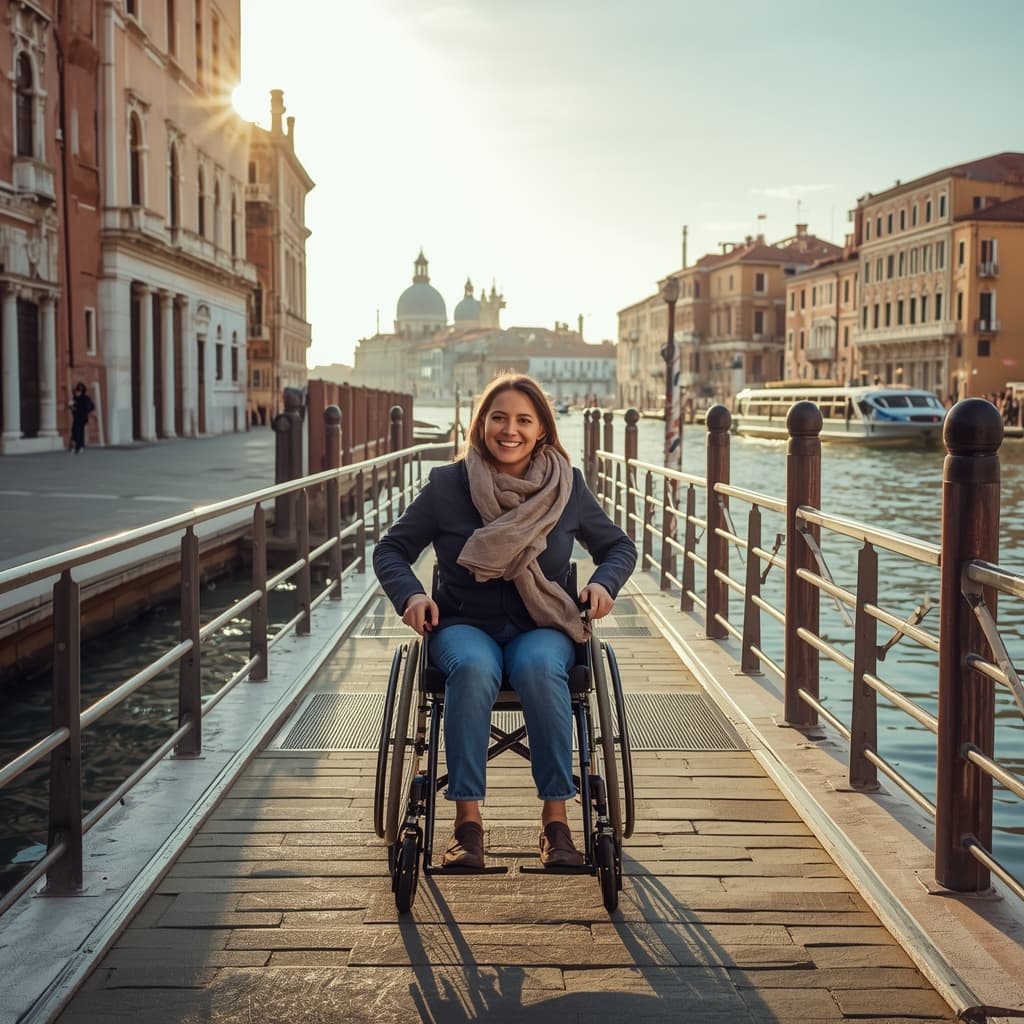
Accessible Venice: 5 Step-Free Routes and Bridges Guide
Table of Contents
- Navigating the Myth: Why Accessible Venice is More Possible Than You Think
- Mastering the Movement: Strategic Step-Free Routes and Bridge Navigation
- Beyond the Bridges: Accessible Public Transport and Building Entrances
- Seamless Journey: Comprehensive Planning Tools, Accommodations, and Essential Services
- Embracing Venice: A Rewarding Accessible Experience Awaits
- Frequently Asked Questions
Navigating the Myth: Why Accessible Venice is More Possible Than You Think
Many travelers assume that navigating Venice presents significant challenges for those with mobility impairments. While the city’s network of bridges and canals is complex, resources like DUBO demonstrate that accessible Venice is increasingly viable. Over the past decade, the city has implemented numerous step-free routes and adapted attractions, disproving the notion that wheelchair users and those requiring accessible tourism are excluded. Proper planning, based on accurate accessibility data, can transform Venice from a logistical challenge into an accessible cultural experience.
Understanding Step-Free Paths
Venice’s unique urban layout can appear daunting, but several main routes feature full step-free access. For example, the route from Piazzale Roma through to Piazza San Marco includes ramps and lifts, and the Rialto Bridge is bypassed by an accessible footbridge nearby. Many vaporetto (water bus) stops comply with standards such as the EU Accessibility Act, providing ramps or hydraulic lifts for boarding. Using detailed local maps that mark wheelchair-accessible paths and facilities—often available through municipal tourism offices or platforms like DUBO—enables planning itineraries that avoid stairs and cobbled stone sections. With these considerations, you can navigate key historical and architectural sites without encountering barriers.
Tips for Optimizing Your Experience
Advance research is critical: familiarize yourself with Venice’s accessible routes and confirm accessibility details directly with service providers. Select accommodations within 500 meters of accessible vaporetto stops to reduce transit difficulties. Prioritize museums and landmarks offering elevators or platform lifts; for instance, the Peggy Guggenheim Collection is fully accessible. Carrying a portable, lightweight ramp can assist with low thresholds or uneven surfaces not yet adapted. Additionally, contacting local disability advocacy organizations or the Azienda dei Servizi Sanitari (ASL) can provide up-to-date information on recent accessibility upgrades and temporary obstacles. Through deliberate planning and utilization of available resources, you can efficiently access Venice’s cultural assets while minimizing physical strain.
Mastering the Movement: Strategic Step-Free Routes and Bridge Navigation
Exploring accessible Venice requires precise planning due to its numerous historic bridges and narrow alleyways. While the majority of paths in Venice include steps, it is increasingly feasible to identify step-free routes that comply with accessibility standards, such as gradient limits of 1:12 for ramps where available. Prioritizing mobility enables visitors to traverse the city’s key areas without encountering stairs. For example, wheelchair users or those seeking step-free travel can utilize mapped routes specifically designed to bypass stairs and high-threshold bridges altogether. Consulting up-to-date accessibility maps and local resources facilitates planning routes that connect iconic neighborhoods, waterways, and viewpoints while minimizing physical barriers.
Strategizing Step-Free Pathways and Bridge Crossings
Mastering Venice’s step-free navigation begins with recognizing which bridges include permanent or temporary ramps compliant with ADA or EU accessibility standards. Major routes such as Strada Nova and Riva degli Schiavoni offer level access with minimal elevation changes. Some bridges, notably Ponte delle Guglie and Ponte degli Scalzi, provide portable ramp installations during peak periods to ease crossings. Utilizing specialized online maps and accessibility guides helps determine optimal routes that accommodate various mobility devices. For example, the accessible Venice guide details step-free streets and fully accessible attractions like Piazza San Marco and the Gallerie dell’Accademia, enabling systematic route customization and reducing dependency on assistance. This methodical approach facilitates smooth passage through Venice’s complex urban fabric.
Advanced Planning and Real-Time Solutions
Incorporating mobile technology enhances accessible tourism by providing real-time navigation and route adjustment capabilities. Dedicated apps and web directories communicate live updates on temporary obstacles such as construction closures or crowd density, allowing users to select alternative step-free pathways instantly. Integrating this with awareness of accessible public transport—including vaporetto vessels equipped with wheelchair ramps and tactile signage—further reduces logistical challenges. For an in-depth overview of Venice’s accessibility measures, including infrastructural improvements and regulatory frameworks, consult the detailed article on Venice accessibility. Through detailed pre-trip preparation combined with adaptive tools, visitors with diverse mobility needs can efficiently access and engage with Venice’s historic environment.
Beyond the Bridges: Accessible Public Transport and Building Entrances
Navigating accessible Venice requires more than just understanding its bridges and canals; public transportation and step-free building access are critical for ensuring a fully inclusive city experience. For travelers using mobility aids or prioritizing barrier-free routes, knowing how entry points and transport options operate is essential. Despite the city’s complex layout, thorough planning reveals multiple solutions designed to facilitate accessibility.
Understanding Step-Free Public Transportation
Venice’s water buses, known as vaporetti, provide step-free boarding at key stops such as Piazzale Roma and Rialto. These stops are equipped with ramps and designated wheelchair spaces compliant with EU accessibility standards (EN 16584-1). However, not all piers have level access; uneven surfaces and boarding gaps can be present. It is advisable to consult updated route maps and schedules highlighting wheelchair-accessible stops, available through ACTV’s official resources. Land buses connecting Mestre, the airport, and Venice’s outskirts also feature low-floor vehicles with kneeling functions, facilitating straightforward boarding. Given the city’s historic infrastructure, allow additional time during transfers, as accessibility features may require assistance or slower boarding processes.
Accessible Building Entrances and Attractions
Many palazzos, museums, and churches in Venice have undergone accessibility upgrades to include lifts or ramp access in compliance with Italian legislation (Law 13/1989). Major sites such as the Doge’s Palace and the Peggy Guggenheim Collection provide dedicated routes for wheelchair users, verified by local accessibility audits. For smaller venues, hotels, or private businesses, advance contact to confirm step-free entrance and accessible facilities is essential. Leveraging detailed information through specialized resources, such as the official Venezia Unica site with practical accessibility information for visiting Venice, can guide precise itinerary planning. This ensures visitors gain meaningful access to culturally significant sites previously limited by architectural barriers.
Encouraging travelers to provide direct feedback on accessibility to local staff supports continuous improvement of Venice’s accessible routes. Careful preparation, grounded in current, authoritative information and proactive communication with service providers, facilitates an efficient and barrier-free exploration of the city.
Seamless Journey: Comprehensive Planning Tools, Accommodations, and Essential Services
Exploring accessible Venice requires preparation well before navigating its canals and narrow passageways. For travelers who need step-free access, careful planning is essential. From identifying accessible Venice attractions to arranging specialized services, visitors with mobility impairments can strategize their routes with confidence. The city’s distinctive urban fabric—with over 400 bridges, many featuring steps—demands familiarity with adapted pathways and infrastructure. Accessibility features vary by district, making comprehensive resources indispensable for turning complex itineraries into manageable experiences. Detailed information on bridge accessibility and related infrastructure is available on the guide to traveling in Venice with a disability page, which provides technical insights relevant to visitors with disabilities.
Planning Approaches: Tools and Route Selection
Effective planning for a stair-free Venice experience involves leveraging digital accessibility maps and authoritative local guides. Specialized walking maps identify routes that avoid steps and highlight wheelchair-accessible paths, elevators, and ramps. Municipal tourist offices and dedicated platforms often provide downloadable PDFs indicating bridges equipped with lifts or ramps, as well as accessible vaporetto (waterbus) stops compliant with EU accessibility standards (EN 301 549). Recommended practices include:
- Downloading updated accessible route maps that cover key landmarks such as Piazza San Marco and the Rialto area
- Verifying real-time accessibility status of vaporetto lines, as some stops have temporary limitations due to maintenance or tide levels
- Choosing accommodations near accessible transport hubs or main pedestrian routes to minimize transfer challenges
Applying these strategies enables travelers to optimize their itinerary while mitigating unexpected obstacles. Combining route planning with current accessibility data reduces risks of inaccessible detours and streamlines transit between landmarks.
Accommodations and Essential Services
Selecting lodging with verified accessibility features is fundamental for an unencumbered stay in Venice. Many hotels now meet national and international standards (such as DIN 18040-2 or ADA compliance) by providing step-free entrances, elevator access, and barrier-free bathrooms with roll-in showers. Major booking platforms increasingly support filters for specific accessibility attributes, facilitating direct comparison based on client needs. Additional essential services include rental of mobility aids (such as powered wheelchairs and manual ramps), accessible water taxis with wheelchair lifts, and trained assistance personnel—all of which should be arranged in advance to ensure availability. Contacting accommodations prior to arrival to confirm features and coordinating with local providers of accessibility services mitigates practical issues and supports a reliable, barrier-free visit.
Embracing Venice: A Rewarding Accessible Experience Awaits
Discovering accessible Venice requires precise planning but is achievable with accurate information. The city, known for its complex canal system and historic architecture, has implemented targeted accessibility improvements for visitors with mobility impairments. Although Venice’s numerous bridges present challenges, over 20 pedestrian routes and key sites now provide step-free access, facilitated by ramps and lifts that comply with international accessibility standards (e.g., ISO 21542). This infrastructure supports independent navigation of the city’s main areas.
Exploring Venice’s Welcoming Side
Recent upgrades include wheelchair-accessible vaporetto lines equipped with low-floor boarding ramps and reserved spaces compliant with ADA and EU accessibility regulations. Major landmarks like St. Mark’s Basilica and the Doge’s Palace have installed compliant ramps and platform lifts, ensuring barrier-free access to main public areas. Dedicated accessible routes, clearly marked and ranging from 1 to 3 kilometers, guide visitors past key scenic points, artisan ateliers, and historic neighborhoods. Detailed accessibility maps and certified local guides are available, providing crucial information on surface conditions, slope gradients, and accessible restrooms to optimize route planning.
Making Accessible Travel Effortless
Maximize your experience by booking accommodations certified for accessibility, preferably within 500 meters of major accessible attractions. Utilize Venice’s accessible transport options, such as vaporettos with priority boarding and adapted water taxis, by arranging reservations in advance to ensure availability. Contact service providers to communicate specific mobility requirements, including equipment dimensions and assistance needs, to guarantee smooth access to museums, restaurants, and less frequented sites. For personalized itineraries or specialized support, consult the dedicated consultation and ordering page to coordinate tailored planning services based on your individual access requirements.
Frequently Asked Questions
Is Venice wheelchair accessible?
Partly, yes. Although Venice has over 400 bridges with steps, a large share of the city can be reached step-free using accessible vaporetto stops, ramped or stairlift-equipped bridges, and designated routes. Tourist offices provide an "Accessible Venice" map showing the area around each water-bus stop that can be reached without crossing a bridge.
How can I cross Venice's bridges without using stairs?
Plan around mapped step-free routes and bridges fitted with ramps (such as Ponte della Costituzione) or stairlifts. A key for the bridge stairlifts is available from the tourist office, and the Accessible Venice map highlights crossings you can avoid altogether.
Are the vaporetto water buses accessible?
Most vaporetti and major stops—including Piazzale Roma, Ferrovia, and San Marco—offer level or ramped boarding with dedicated wheelchair spaces. Lines 1 and 2 along the Grand Canal are generally the most reliably accessible.
Which Venice attractions offer step-free access?
The Peggy Guggenheim Collection, the Doge's Palace, St. Mark's Basilica, and the Gallerie dell'Accademia provide accessible routes or platform lifts to their main areas. For smaller venues and hotels, contact them in advance to confirm step-free entry.
Where can I get an accessible map of Venice?
You can pick one up from the tourist offices at Piazzale Roma or Santa Lucia, or download it online via Venezia Unica. The most accessible tourist office is the one on Piazza San Marco.