
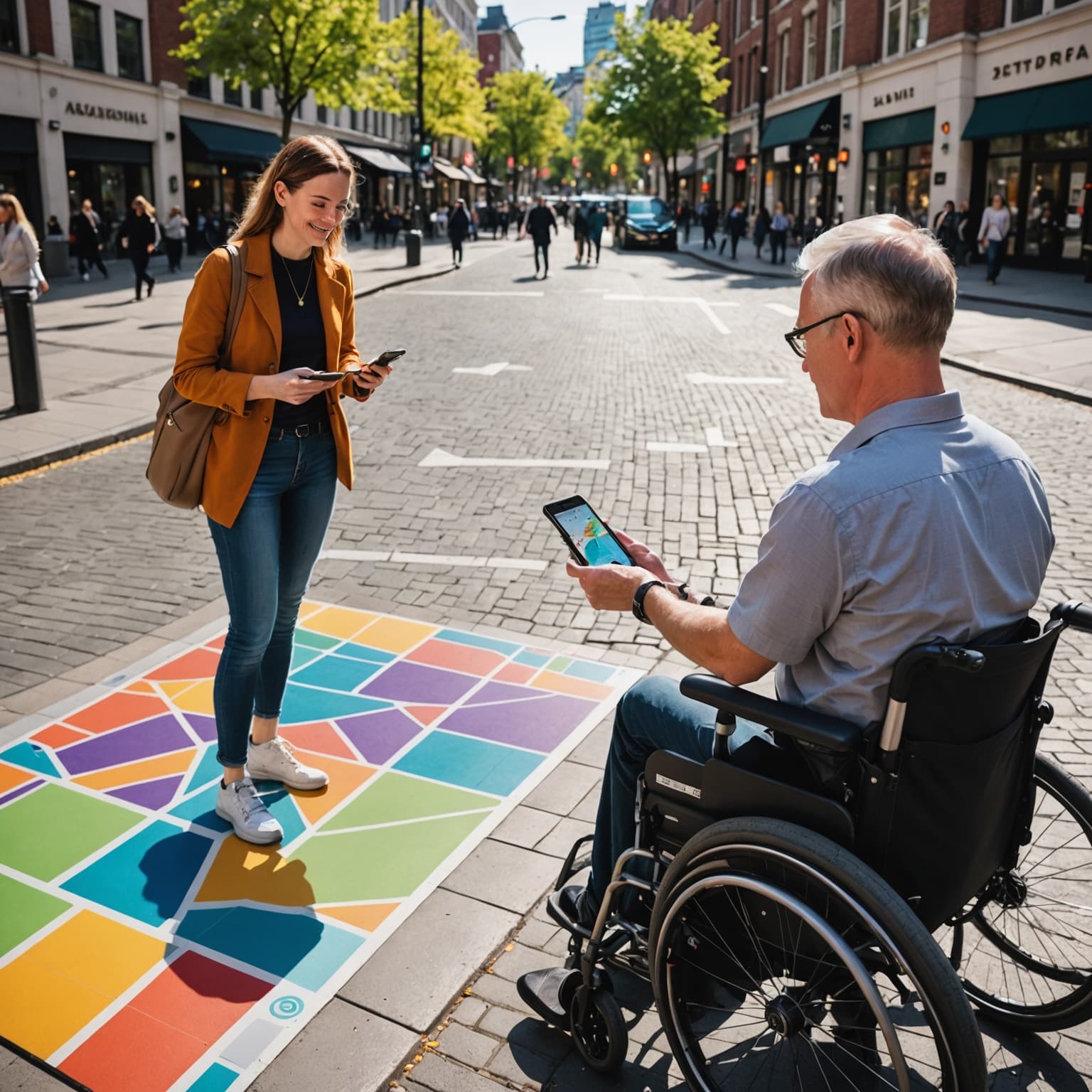
Accessibility app: 5 Ways Community Mapping Enhances Real-Time Navigation
Table of Contents
- Navigating the Urban Labyrinth: The Critical Need for Real-Time Accessibility Information
- The Architecture of Contribution: How Community Data Powers Real-Time Accessibility Mapping
- Beyond Navigation: The Profound Social and Economic Impact of Dynamic Accessibility Data
- Evolving the Landscape: Challenges, Innovations, and the Future of Inclusive Digital Navigation
- Charting a Fully Accessible Future: The Enduring Power of Collective Action
- Frequently Asked Questions
Navigating the Urban Labyrinth: The Critical Need for Real-Time Accessibility Information
In modern cities, navigating urban environments remains challenging for individuals with disabilities, particularly when real-time data on barriers and accessible routes is unavailable. Tools like DUBO are transforming user interaction by delivering timely updates about key access points, elevator outages, or construction zones that affect mobility. This realtime information supports users of an accessibility app and informs urban planners and advocates working to design genuinely inclusive infrastructure.
The Power of Real-Time Accessibility Mapping
Real-time accessibility mapping goes beyond static databases by continuously updating users as conditions evolve. For instance, when a building’s primary elevator experiences downtime, the ability to report and access verified incident data within minutes is essential. These real-time updates enable users to reroute efficiently, minimizing delays and reducing the cognitive load of travel planning. Crowdsourced data collection broadens the information base, allowing wheelchair users, transit riders, and delivery personnel to contribute observations according to standards like the Web Content Accessibility Guidelines (WCAG) and ADA. Ultimately, accurate, current data converts uncertain urban navigation into a manageable, predictable process.
Cultivating More Inclusive Cities with Technology
Effective accessibility solutions require smooth integration and multi-stakeholder collaboration. Embedding inclusive city maps into public transit applications or municipal services facilitates proactive trip planning aligned with standards such as the ISO 21542:2011 for accessibility. Accessible route applications deliver optimal results when combined with user-driven reporting functionalities and comprehensive venue accessibility details, including dimensions of doorways, ramp gradients, and tactile guidance. Encouraging continuous community engagement ensures that datasets remain current and relevant, enabling urban designs to evolve responsively to the diverse mobility requirements of all residents.
The Architecture of Contribution: How Community Data Powers Real-Time Accessibility Mapping
Understanding how communities contribute to real-time digital maps is essential for the effectiveness of an accessibility app. Unlike static datasets that rapidly become obsolete, platforms leveraging crowdsourced input maintain up-to-date and actionable information. For example, when transit users report a malfunctioning elevator or temporary construction blocking a route, these updates can be verified and integrated immediately, improving navigation accuracy for others. This collaborative approach enables anyone—whether a wheelchair user, parent with a stroller, or delivery cyclist—to provide timely, location-specific observations that enhance map reliability.
How Community Data Fuels Accessible Mapping
Modern inclusive city maps depend on a distributed network of contributors. Simple user actions—such as reporting newly installed ADA-compliant ramps or flagging obstacles that violate accessibility standards—help preserve precise, current data for public spaces and transit hubs. Features like geotagged photo uploads and push notifications facilitate validation and increase data confidence. For actionable guidance on selecting the optimal platform, consult resources such as this recent accessibility app guide. This data-driven insight not only simplifies navigation but also supplies municipalities with evidence to prioritize barrier remediation under regulations like the Americans with Disabilities Act (ADA).
Practical Applications and Next Steps
Effective implementation of crowdsourced accessibility data delivers tangible benefits, including:
- Dynamic routing algorithms that adjust in real time based on verified environmental changes
- Improved visibility and documentation of both temporary obstacles—such as roadwork durations—and permanent barriers violating accessibility codes
- Strengthened community engagement, enabling users to advocate for infrastructure improvements backed by empirical data
Looking ahead, embracing open data standards like the General Transit Feed Specification (GTFS) for accessibility extensions, along with cross-platform interoperability, will extend the usability of inclusive navigation tools. For a detailed analysis of technology’s role in accessible mobility, refer to the discussion on the importance of accessibility applications and assistive technology. As community contributions grow in volume and accuracy, these tools become more robust, empowering all users to navigate urban environments with confidence and precision.
Beyond Navigation: The Profound Social and Economic Impact of Dynamic Accessibility Data
Dynamic accessibility data is more than a navigation aid—it underpins equitable urban design. As cities evolve, using an accessibility app allows individuals with mobility impairments to plan routes efficiently, enhancing their autonomy and participation in daily activities. The real-time accessibility data these platforms deliver supports not only users but also urban planners and local businesses committed to inclusive infrastructure development. For detailed methodologies on evaluating compliance standards of such tools, the Web Accessibility Evaluation Tools list provided by the W3C Web Accessibility Initiative (WAI) serve as authoritative references.
Social Transformation Through Accessibility Mapping
Crowdsourced accessibility platforms catalyze significant shifts in urban social dynamics. By integrating community input—such as reporting malfunctioning elevators or inaccessible sidewalks—users collectively generate real-time maps of barriers and accessible alternatives. For example, a university student can identify fully accessible transit routes, while a resident may locate the nearest step-free entrance at an event venue. Critical outcomes include:
- Decreased social isolation for people with disabilities
- Improved social inclusion and participation
- Strengthened community engagement through shared data
Wider adoption of these platforms expedites iterative improvements in public spaces. The key insight: data-driven, community-powered mapping reshapes urban environments from the ground level.
Economic Impact and Practical Implementation
Beyond social advantages, the economic ramifications are measurable. Businesses incorporating accessible route data can expand their customer demographics instantly. Features like real-time reporting of access issues allow property managers to prioritize facility upgrades in line with standards such as the ADA (Americans with Disabilities Act) or EN 301 549, improving foot traffic and revenue. Practical recommendations for enterprises include:
- Maintain up-to-date listings on inclusive city maps, including verified accessibility features
- Utilize accessibility data to target marketing campaigns towards underserved customer segments
- Act promptly on user-generated accessibility feedback to address barriers effectively
In summary, dynamic accessibility platforms offer a strategic advantage by promoting compliance and operational improvements while fostering inclusive growth and innovation in urban economies.
Evolving the Landscape: Challenges, Innovations, and the Future of Inclusive Digital Navigation
As urban environments increasingly integrate advanced technologies, the development of accessibility apps is transforming how people with disabilities navigate their surroundings. These digital tools address daily mobility barriers, but achieving fully inclusive navigation remains a complex challenge. From wheelchair users requiring curb ramps and elevators compliant with ADA standards to parents with strollers or travelers with temporary impairments, inclusive navigation supports a broad spectrum of users. Understanding the interplay between digital technology and physical infrastructure is essential for advancing accessibility.
Current Barriers and Groundbreaking Solutions
Despite significant advancements, digital accessibility platforms still grapple with challenges such as incomplete or outdated data, inconsistent accessibility standards across jurisdictions, and the dynamic nature of urban landscapes. For instance, a broken elevator or unplanned construction can render a previously accessible route unusable. To mitigate these issues, many applications leverage crowdsourced data and provide real-time updates. Users can report obstacles like out-of-service elevators or blocked ramps, enabling immediate rerouting. According to Accessibility - Wikipedia, these digital services increasingly incorporate features such as detailed accessibility metadata and multimodal integration. Maintaining updated, standardized city maps and establishing efficient reporting protocols are critical for reliable navigation.
The Future of Seamless Inclusive Navigation
Future innovations, including AI-driven dynamic routing and deeper integration with municipal infrastructure systems, promise more responsive and personalized navigation. For example, an app could automatically adjust routes using live data feeds from sensors and municipal maintenance reports, accommodating sudden changes like elevator outages or emergency detours. To support these advancements, city planners and developers should prioritize:
- Implementing standardized, real-time accessibility data APIs aligned with protocols such as the General Transit Feed Specification (GTFS-RT) or the Accessible API standard
- Fostering ongoing collaboration with disability advocacy groups and local users for continuous feedback
- Ensuring transparent communication regarding infrastructure changes, maintenance schedules, and disruptions through centralized channels
Successful deployment of these technologies depends on integrating community-driven data with official sources. Combining rigorous data validation with municipal cooperation will enable the creation of comprehensive, dependable city navigation tools that empower all users to travel with confidence and autonomy.
Charting a Fully Accessible Future: The Enduring Power of Collective Action
Building a fully accessible future requires more than technology—it demands sustained collaboration among individuals, communities, and organizations. When users share their knowledge and real-world experiences, the effectiveness of any accessibility app extends well beyond its code and core features. Collective efforts enhance digital solutions by providing reliable, context-rich data that improve navigation in urban environments for people with diverse mobility challenges. For instance, a platform enabling users to report broken elevators, identify inaccessible crosswalks, or share updated accessible routes creates a continuously updated dataset. As contributions increase, the mapping data becomes more accurate and timely, allowing users to plan travel routes that comply with accessibility standards such as the ADA or WCAG, and boosting their independence and safety.
The Collective Power Behind Mapping Solutions
Crowdsourced accessibility tools fill critical information gaps that traditional centralized databases often overlook. When local residents regularly update an inclusive city map, they help identify physical barriers—like uneven sidewalks exceeding ADA slope limits—or discover new accessible alternatives faster than official sources. This real-time, ground-level data stream supports journey planning, particularly in complex urban settings with variable infrastructure. For example, a reporting feature that marks inaccessible subway entrances with stair-only access helps users avoid physical obstacles and route through elevators or ramps conforming to universal design principles. The key insight is that increased community participation improves data reliability and coverage, demonstrating the measurable value of shared responsibility in maintaining accessible urban navigation.
If you want to translate collaborative accessibility initiatives into practical outcomes or explore customized digital solutions, you can request expert consultation and project guidance through specialized advisory services.
Frequently Asked Questions
What is a crowdsourced accessibility app?
It's an app where users report and update real-world accessibility data—ramps, elevators, obstacles, broken lifts—so everyone gets current, verified information for planning step-free routes through a city.
How is real-time accessibility data kept accurate?
Through community contributions such as geotagged photos and reports, validation steps that confirm submissions, and increasingly through integration with official municipal data feeds and maintenance reports.
Can I report a broken elevator or blocked ramp?
Yes. Reporting features let users flag outages or obstacles, which are then verified and shared so others can reroute quickly and avoid an inaccessible path.
Who benefits from accessibility mapping apps?
Wheelchair users, parents with strollers, people with temporary injuries, and delivery workers all benefit—as do urban planners and businesses, who use the data to prioritize barrier fixes and reach more customers.
How do these apps connect with city transport systems?
Many use open standards like GTFS and GTFS-RT along with accessibility APIs, allowing live feeds from sensors and maintenance schedules to update accessible routes automatically.