
Deaf Friendly Travel: 6 Essential Tips for Accessible Journeys
Table of Contents
- Navigating the World: A Comprehensive Guide to Deaf-Friendly Travel
- Understanding the Landscape: The Crucial Need for Deaf-Accessible Travel Innovations
- Harnessing the Power of Sight: Essential Visual Alerts and Signage for Deaf-Friendly Journeys
- Beyond the Audible: Empowering Navigation with Subtitles, Live Captioning, and Haptic Wayfinding Technologies
- The Road Ahead: Integrating Smart Technologies for a Truly Inclusive Travel Experience
- Charting a New Course: Embracing Inclusive Design for a World Accessible to All Deaf Travelers
- Frequently Asked Questions
Navigating the World: A Comprehensive Guide to Deaf-Friendly Travel
Exploring new destinations can be rewarding for all travelers, particularly when accessible resources support those with hearing loss. With the growing emphasis on inclusive travel, planning has become more efficient and informed. Platforms like DUBO, a platform offering comprehensive accessibility information, provide verified data on hotels, attractions, and transportation services that accommodate deaf travelers. Reliable, detailed information reduces uncertainties, whether traveling solo or with family.
Choosing Deaf Adjustable Tools and Apps
Advancements in assistive technology significantly improve travel experiences for the deaf. Visual alert applications deliver real-time notifications for flight delays, gate changes, hotel check-ins, or public transport schedules. Vibration-based navigation aids, such as wearable devices or smartphone apps equipped with haptic feedback, assist in safely navigating busy airports and unfamiliar urban environments. When booking accommodations or visiting venues, prioritize those offering features like captioned audio guides, induction loop systems, or text-based communication at reception desks aligned with ADA and EN 301 549 accessibility standards.
Practical Travel Preparation and Next Steps
Effective planning includes compiling a detailed itinerary emphasizing locations verified as deaf-friendly, and establishing alternative communication strategies, like pre-downloaded speech-to-text or sign language apps. Verify that hotel rooms have visual alarm systems compliant with UL 217 or EN 14604 standards. Download captioned guidance and translation tools before departure to mitigate connectivity issues and ensure uninterrupted communication throughout the trip.
Understanding the Landscape: The Crucial Need for Deaf-Accessible Travel Innovations
Travelers who are deaf or hard of hearing often face obstacles that complicate navigating new destinations and can lead to social isolation. Traditional travel services rarely address their specific communication and accessibility needs, resulting in restricted access to essential information, accommodations, and experiences. Understanding deaf culture is fundamental to recognizing why targeted improvements in travel accessibility are necessary. For example, the absence of real-time captioning, sign language interpretation, or visual alert systems at airports, train stations, and hotels significantly impedes independence and safety. In response, demand for deaf friendly travel solutions, which comply with standards like the ADA and WCAG 2.1, is increasing.
Why Accessible Innovation Matters in Travel
Prioritizing accessibility for travelers with hearing loss involves incorporating technologies such as real-time captioning, vibration-based navigation aids, and applications that provide customized visual notifications. Research and case studies reveal that integrating such assistive technologies can convert common travel frustrations into manageable, autonomous experiences. For instance, apps utilizing GPS and real-time data now offer visual gate change alerts and emergency notifications that comply with FCC regulations for accessible communication. Resources like a deaf-friendly travel guide equip travelers with practical strategies for preparing in advance and using these tools effectively. Ultimately, reducing communication barriers enhances opportunities for cultural participation and independent exploration for all travelers.
Practical Steps Toward Inclusion
Implementing inclusive travel practices requires concrete measures by tourism providers, including:
- Providing video content with accurate, synced captions and optional sign language interpretation for museum tours
- Training frontline staff in basic American Sign Language (ASL) or the regionally relevant signed language
- Installing vibration-enabled or visual alert fire alarms and door notifications in hotel rooms, meeting NFPA 72 standards
Harnessing the Power of Sight: Essential Visual Alerts and Signage for Deaf-Friendly Journeys
Visual alerts and well-designed signage are critical components in creating truly deaf friendly travel environments. For individuals who cannot rely on auditory announcements, clear visual cues ensure essential travel information—such as boarding times, platform changes, and emergency notifications—is effectively communicated without delay. According to resources from Hearing, Ear Infections, and Deafness | NIDCD, recognizing the specific challenges faced by those with hearing loss is fundamental to advancing accessibility standards in transportation hubs and public venues.
Designing Effective Visual Alerts
Transport terminals, hotels, and urban centers can enhance accessibility by integrating visual alert systems including prominently positioned high-resolution digital displays, flashing LED lights for emergency signals, and captioned video monitors. For example, airports using synchronized digital screens at check-in counters and boarding gates reduce miscommunication and delay. City buses equipped with scrolling LED text displays deliver timely route updates, benefiting all passengers. Effective visual signage should adhere to the following criteria:
- Use of high-contrast color schemes (e.g., black/white or blue/yellow combinations) and font sizes no smaller than 18 points for readability
- Employment of simplified, standardized pictograms consistent with ISO 7001 for universal comprehension
- Real-time information updates, particularly during delays, cancellations, or route diversions
Applying these standards minimizes the risk of missed critical information and enhances user confidence. Consistency in visual communication across all touchpoints is necessary to support independent navigation for travelers with hearing impairments.
Implementing Personalized Mobile Solutions
Many travelers complement fixed visual systems with mobile apps that provide real-time alerts directly to smartphones or wearable devices. Features such as customizable vibration patterns combined with closed captioning for navigation instructions help maintain situational awareness, especially in complex or unfamiliar environments. Deploying these personalized tools alongside stationary signage extends accessibility and improves overall travel safety and efficiency for users regardless of hearing ability.
Beyond the Audible: Empowering Navigation with Subtitles, Live Captioning, and Haptic Wayfinding Technologies
Travel accessibility remains a critical concern for the Deaf community, who face unique communication challenges in transit environments. Technologies such as subtitles on public announcement systems, real-time captioning via Automatic Speech Recognition (ASR) software, and vibration-based wayfinding devices are advancing deaf friendly travel. These solutions reduce communication barriers while enabling travelers to navigate independently with improved situational awareness. As transit authorities and destinations increasingly integrate these accessible technologies, Deaf travelers experience greater autonomy, safety, and inclusion.
Accessible Navigation Tools in Action
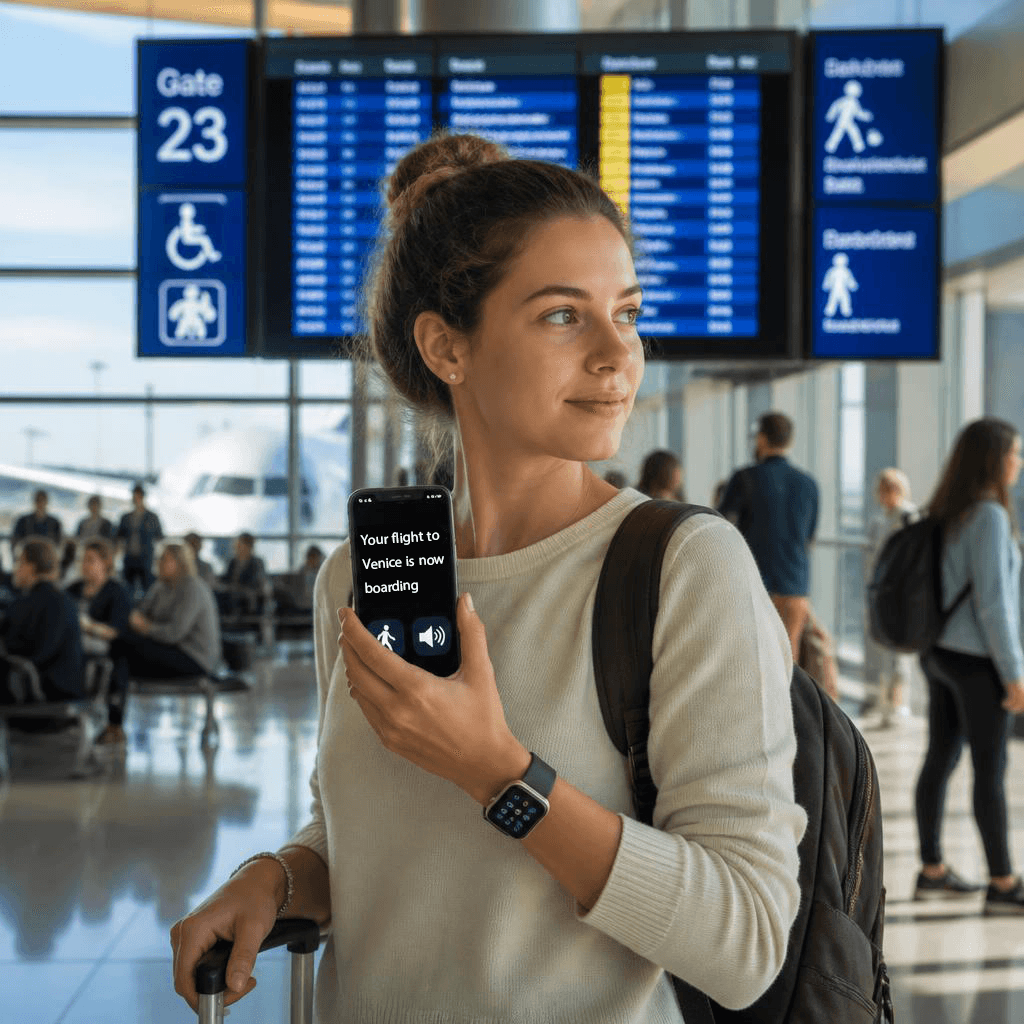
Current inclusive travel technologies are reshaping how hearing-impaired travelers interact with their surroundings. Many international airports and major transit hubs have implemented visual alert apps compliant with WCAG 2.1 standards, delivering push notifications for gate changes, boarding times, and emergency alerts directly to smartphones. Real-time captioning displays utilizing ASR—accurate to within 90-95% under optimal conditions—are now common for guided tours and public presentations, ensuring equitable information access. Haptic navigation devices, including smartwatches with programmable vibration patterns, provide discrete, non-visual directional cues optimized for indoor wayfinding. Deployment of these technologies aligns with ADA and EN 301 549 accessibility requirements and enhances both safety and user confidence.
Practical Implementation and Future Directions
Effective trip planning for Deaf travelers necessitates identifying venues offering robust accessibility features, such as museums equipped with captioned multimedia guides and staff trained in basic sign language or assisted communication techniques. Route-planning applications like Moovit and AccessNow integrate filters for hearing accessibility, highlighting transport options with visual announcement systems and vibration alerts. According to an overview of accessible tourism, innovations in multimodal information delivery benefit a broad spectrum of users requiring clear, multisensory cues—such as individuals with auditory processing disorders or language barriers—thereby enhancing overall travel inclusivity.
The Road Ahead: Integrating Smart Technologies for a Truly Inclusive Travel Experience
Accessible travel is advancing significantly due to developments in smart technology. The emphasis is moving beyond basic access to delivering a seamless, functional experience for all travelers, including those requiring deaf friendly travel solutions. Contemporary applications now convert critical public announcements into real-time visual alerts on mobile devices and provide discrete vibration notifications that assist travelers in navigating busy terminals and transit hubs.
Smart Innovations Driving Inclusion
Recent innovations demonstrate how wearables and connected devices reshape travel navigation. For instance, visual alert apps can instantly notify users of gate changes at airports, while haptic feedback through vibration-guided navigation aids individuals in locating taxi stands or hotel receptions without missing essential directional cues. These technologies enhance accessibility not only for the deaf community but also for those with varying levels of hearing impairment. Consistent with the Americans with Disabilities Act (ADA) standards, integrating these technologies is critical for creating truly inclusive travel environments. Detailed legal requirements and implementation guidance are available on the ADA National Network website.
Practical Next Steps and Future Outlook
As smart technology evolves, travel planners should incorporate features such as real-time captioning, voice-to-text conversion, and hands-free assistance systems that comply with recognized accessibility standards, including WCAG 2.1. By embedding these assistive technologies into infrastructure and services, the industry can enable travelers with hearing impairments to independently and confidently navigate various travel environments.
Charting a New Course: Embracing Inclusive Design for a World Accessible to All Deaf Travelers
As global travel evolves, prioritizing deaf friendly travel is essential. By integrating inclusive design at every stage—navigation, accommodation, and leisure—travelers who are deaf or hard of hearing gain meaningful autonomy. Incorporating features such as visual alerts conforming to WCAG 2.1 standards, real-time text notifications via SMS or app-based messaging, and captioned or sign language-supported guidance into transport hubs and hotels ensures accessibility is embedded as a functional requirement, not an afterthought.
Design Strategies for Accessibility
Implementing solutions like vibration alerts synchronized with visual signals and clear, high-contrast, easy-to-read signage compliant with ADA standards ensures environments accommodate all users effectively. For example, airports deploying real-time visual alert systems on public screens and in terminals assist travelers in monitoring gate changes, security updates, or emergencies without relying on auditory cues. Moreover, attractions providing detailed guides with multiple spoken languages as well as video content in sign language increase comprehension and inclusivity. Systematically prioritizing deaf accessibility at each touchpoint enhances the travel experience and operational efficiency for all visitors.
Practical Next Steps for Businesses
Organizations aiming to implement or improve inclusive travel initiatives should establish routine staff training programs on deaf culture and communication techniques, such as basic sign language and assistive technology use. Conducting regular accessibility audits against recognized standards (e.g., ADA, EN 301 549) to identify and mitigate physical or informational barriers is critical. For tailored assistance in developing compliant, practical solutions for deaf friendly travel, consider contacting us through our inquiry page for detailed consultation and project support.
Frequently Asked Questions
What makes travel deaf-friendly?
Deaf-friendly travel relies on clear visual alerts and signage, real-time captioning, text-based communication options, vibration or haptic notifications, and staff trained in basic sign language or assisted communication—so essential information never depends solely on sound.
Which apps help deaf travelers most?
Visual alert apps that push flight, gate, and transport updates to your phone or smartwatch, speech-to-text and live captioning apps, and route planners such as Moovit or AccessNow that flag accessibility features are all useful.
How can I be alerted to things I can't hear, like fire alarms?
Choose accommodations offering visual (flashing) and vibrating alert systems for alarms and door knocks. Many hotels provide accessible rooms meeting standards such as NFPA 72 or EN 14604 on request.
Are airports and stations equipped for deaf travelers?
Many major hubs use synchronized visual displays for gate changes and boarding, along with captioned announcements. It's still worth confirming specific facilities with the airport or transit operator before you travel.
Should I tell hotels and venues about my hearing needs in advance?
Yes. Contacting them ahead lets staff prepare visual alerts, captioned guides, or text-based communication, and confirm that an accessible room or service is actually available when you arrive.